

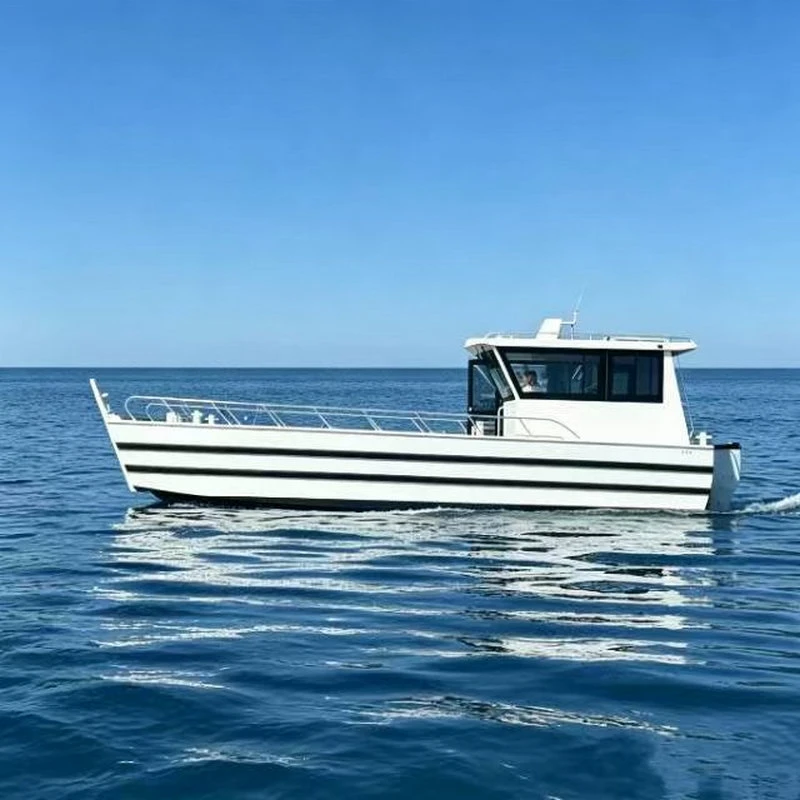
Longkou Jinda Shipbuilding designs and manufactures aluminum cargo landing craft for coastal logistics, island resupply, marine construction and remote-site operations. The open cargo deck and integrated bow ramp support the transport of construction materials, containers, wheeled machinery, palletized goods and other commercial cargo to suitable shore landing sites.
The 12.9 m model serves as the reference platform for customized vessel projects. Jinda supports single-vessel construction and fleet orders, with options for hull dimensions, deck reinforcement, bow ramp capacity, propulsion systems and wheelhouse layouts.
Cargo Landing Craft Specifications
|
Parameter |
Specification |
|
Overall Length (LOA) |
12.9 m |
|
Beam |
3.4 m |
|
Hull Depth |
1.25 m |
|
Hull Material |
5083-H116 aluminum-magnesium alloy |
|
Rated Distributed Payload |
10–15 tonnes |
|
Maximum Crew |
3 persons |
|
Reference Draft at Full Load |
Approximately 0.85 m |
Cargo Capacity and Working Deck Design
Reinforced Deck for Commercial Cargo
The reference 12.9 m model has a rated distributed payload of 10–15 tonnes. For excavators, forklifts, dump trucks and other wheeled machinery, deck plating and longitudinal stiffeners can be reinforced around specified axle loads, wheel track and wheel contact pressures.
Container and General Cargo Arrangements
The open deck can accommodate bulk materials, palletized goods, packaged supplies, containers and mixed cargo. Container configurations can include foundations and twist-lock fittings for 10 ft or 20 ft general-purpose containers, with securing arrangements integrated into the deck structure.
Optional deck fittings include lashing rings, bollards, fairleads, cargo-stop walls, removable guardrails and equipment mounting points. Surface finishes include aluminum checker plate, polyurethane anti-slip coatings and anti-slip grating.
Bow Ramp Design and Loading Systems
Hydraulic Bow Ramp
The integrated bow ramp enables vehicle and cargo transfer between the working deck and suitable shore landing surfaces. Hydraulic actuation is the standard arrangement, while a mechanical winch system is available for projects requiring a simpler operating and maintenance setup.
Ramp dimensions and structural capacity are developed around vehicle size, wheel loads, shore elevation and the required loading gradient. Ramp load-rating options of 5 t, 10 t, 15 t and 20 t can be evaluated for different cargo-handling applications.
Main girders, pivot pins, hydraulic cylinders and supporting hull structures are designed for the selected load rating.
Ramp Surface and Safety Features
Available options include anti-slip checker plate, removable anti-slip grating, reinforced edge wear strips, side guards, sealing strips and mechanical safety locks. These features support repeated loading operations and help protect the ramp during commercial service.
For vessels fitted with deck cranes or other lifting equipment, Jinda can coordinate the ramp arrangement with the surrounding deck reinforcement and supporting hull structure.
Shallow-Draft Performance and Shore Access
Hull Design for Landing Operations
The reference design uses a flat-bottom hull with a fine-entry bow to support shallow-water operations and access to suitable landing sites. This configuration is intended for routes where conventional quay infrastructure is limited or unavailable.
Landing-Site Engineering
Jinda can tailor hull geometry and local reinforcement to the intended landing environment, including sandy, muddy or rocky shorelines. Engineering reviews cover minimum water depth, tidal range, beach gradient, seabed composition, current, wave conditions and transit distance.
Commercial Applications
Island Logistics and Coastal Supply
Transport provisions, construction materials, packaged goods and essential supplies to islands and remote shore facilities. The bow-ramp arrangement supports cargo transfer at suitable landing points without relying exclusively on permanent dock infrastructure.
Marine Construction and Infrastructure
Carry aggregates, prefabricated components, tools and approved wheeled equipment between shore bases and marine work sites. Reinforced deck areas and vehicle-rated ramps support machinery transport and repeated loading operations.
Aquaculture and Fisheries Support
Move feed, nets, fishing gear and operational supplies between land bases and aquaculture facilities. Deck layouts and cargo-securing arrangements can be configured for the equipment used in daily operations.
Harbor Logistics and Equipment Transfer
Support short-distance cargo movements, worksite supply and equipment shuttling in suitable sheltered waters. Vessel layouts can be adapted to cargo-handling methods and access limitations at individual operating sites.
Remote-Site Resupply
Deliver essential materials and equipment to locations with limited transport infrastructure. Cargo arrangements, stability requirements, weather limitations and operating-area considerations are incorporated into the project design.
Hull Construction and Structural Engineering
Marine-Grade Aluminum Hull
The reference vessel uses 5083-H116 aluminum-magnesium alloy, a marine-grade material widely used in aluminum vessel construction. Hull plating, framing and supporting structures are designed around the intended payload, operating conditions and service requirements.
Deck and Bow Ramp Reinforcement
For heavy-duty cargo operations, Jinda can reinforce vehicle loading zones, ramp pivots, deck-mounted equipment foundations and other concentrated-load areas. Deck plating, stiffeners, bulkheads and local supports are coordinated to suit the approved loading arrangement.
This integrated structural approach helps align the hull, deck and ramp with the vessel's intended cargo-handling requirements.
Technical Drawings and Engineering Documents
The agreed technical package can include general arrangement drawings, hull construction drawings, structural details, material documentation, stability information, welding procedures and records of specified non-destructive testing (NDT).
Propulsion and Custom Configuration Options
Hull Dimensions and Layout
The 12.9 m model serves as the reference platform for custom development. Alternative lengths, including compact 8–12 m vessels and larger 15 m, 18 m or 20 m configurations, can be developed.
Deck Load and Cargo Arrangements
Jinda offers several deck configuration options:
General cargo: Open working deck with suitable reinforcement and lashing points for palletized goods, bagged materials and packaged supplies.
Heavy machinery: Reinforced plating and stiffeners designed around vehicle axle loads, wheel track and wheel contact pressures.
Container transport: Deck foundations and securing fittings for selected 10 ft or 20 ft containers.
Dedicated working zones: Reserved areas for cargo storage, equipment mounting, crane foundations and crew walkways.
Deck fittings, surface finishes and removable barriers can be incorporated into the general arrangement.
Bow Ramp Configuration
Ramp length and width are developed around vehicle dimensions, shore elevation and the required loading gradient. Available load-rating targets include 5 t, 10 t, 15 t and 20 t, with the final safe working load established through structural design.
The standard hydraulic arrangement uses twin cylinders. A mechanical winch option is available, together with optional safety locks, anti-slip surfaces, wear strips, side guards and sealing features.
Propulsion and Engine Selection
Conventional propeller propulsion is a practical option for operations with sufficient water depth. Propeller protection or a protective nozzle can be considered for landing craft exposed to grounding risks.
Domestic and imported diesel engines are offered. Fuel tanks, steering, throttle, engine monitoring and cooling systems are configurable.
Wheelhouse and Crew Arrangement
Wheelhouse positions can be arranged forward, amidships or aft. An aft wheelhouse can preserve more uninterrupted cargo deck space, while the overall layout is designed around visibility, working access and cargo handling.
The reference arrangement accommodates up to three crew members. Alternative layouts for four or six people can be developed with corresponding changes to seating, storage and accommodation space.
Available features include enclosed or open wheelhouses, sun canopies, windscreen wipers, air conditioning, heating and customized control consoles. Mounting provisions can be included for GPS, AIS, radar and VHF radio.
Electrical Systems and Optional Equipment
The onboard electrical package can include navigation lights, work lights, GPS, VHF radio, echo sounder, AIS, radar and CCTV. Additional options include electric or manual windlasses, upgraded bilge pumps, automatic bilge alarms and fire-protection equipment.
Hydraulic deck cranes with nominal capacities of 3 t, 5 t or 8 t can be evaluated for suitable projects. Crane foundations, lifting radius, working height and supporting structure are incorporated into the engineering review.
Certification and Survey Planning
Jinda can coordinate technical documentation and inspection requirements for the selected certification route. Applicable requirements may include CE-related conformity assessment, CCS, BV or ABS classification, and relevant domestic survey requirements.
Manufacturing Capabilities and Project Delivery
Aluminum Vessel Manufacturing
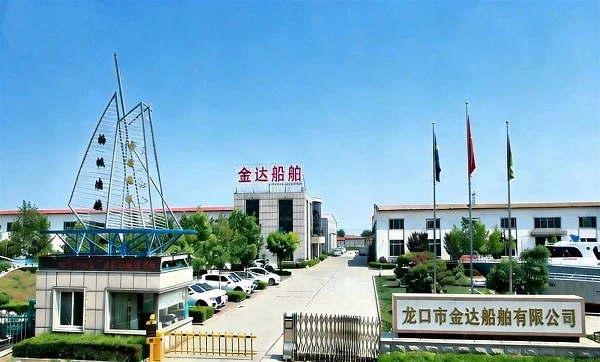
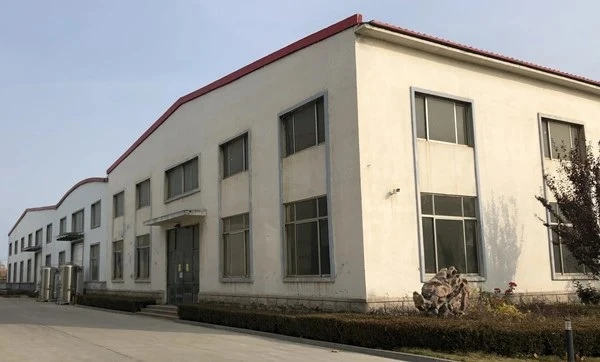
Longkou Jinda Shipbuilding specializes in aluminum vessel design and fabrication for commercial and specialized marine applications. Manufacturing capabilities cover hull fabrication, structural assembly, bow-ramp construction, deck reinforcement and equipment installation for standard and customized vessels.
|
Manufacturing Resource |
Details |
|
Total Factory Area |
46,000 m² |
|
Aluminum Shipbuilding Workshops |
20,000 m² |
|
Workforce |
More than 180 employees |
|
Design Capabilities |
In-house vessel design and drawing development |
|
Production Equipment |
CNC machinery, laser cutting systems and specialized aluminum welding equipment |
Production and Delivery Process
Engineering and specification: Define principal dimensions, cargo arrangements, structural reinforcement, ramp design, propulsion and certification requirements.
Drawing approval: Review the general arrangement and technical specification before releasing detailed production drawings.
Fabrication and outfitting: Carry out hull assembly, framing, welding, ramp fabrication, equipment installation and commissioning in accordance with the approved scope.
Inspection and handover: Complete agreed inspections and functional checks, then prepare the vessel and documentation for handover.
The production schedule, delivery method and supply scope are confirmed during contract review. Single-vessel construction and fleet orders are available for commercial projects.
Quality Control
Manufacturing Inspection
Quality control is incorporated into the project inspection plan. Activities can cover material documentation, dimensional checks, welding inspection, structural assembly, equipment installation and functional testing.
Non-destructive testing can be included where specified by the technical requirements or survey scope.
Quality Management and Technical Records
Jinda maintains an ISO 9001 quality management system. Project documentation can include material certificates, welding records, inspection reports, equipment manuals, general arrangement drawings and applicable survey or conformity documents specified in the contract.
FAQ
Hot Tags: cargo landing craft, China cargo landing craft manufacturers, suppliers, factory